
West Chester, PA Brisbane, QLD

Get in Touch

Edit Template

Five Operative Axioms.
One Integrated Response.

From symptom management to Renewable Water

Water security is failing because water is still managed as though engineered systems and living water systems operate in separate silos. The New Agenda is revealed by five operative axioms that explain the present trajectory, predict what follows if it continues, and define the conditions a credible response must meet.

These are not slogans. They are evidence-led propositions about infrastructure, source-water risk, renewal, intervention, and biological capability. Together, they make it self-evident that built and natural water infrastructure must be managed as one integrated system to restore Nature’s capacity to sustain the Renewable Water paradigm.

OPERATIVE AXIOM 1

Built water infrastructure is only as secure as the natural water infrastructure that supplies it.

The Paradox of Infrastructure

When the Systems Built to Manage Water Begin to Overwhelm the Systems That Renew It

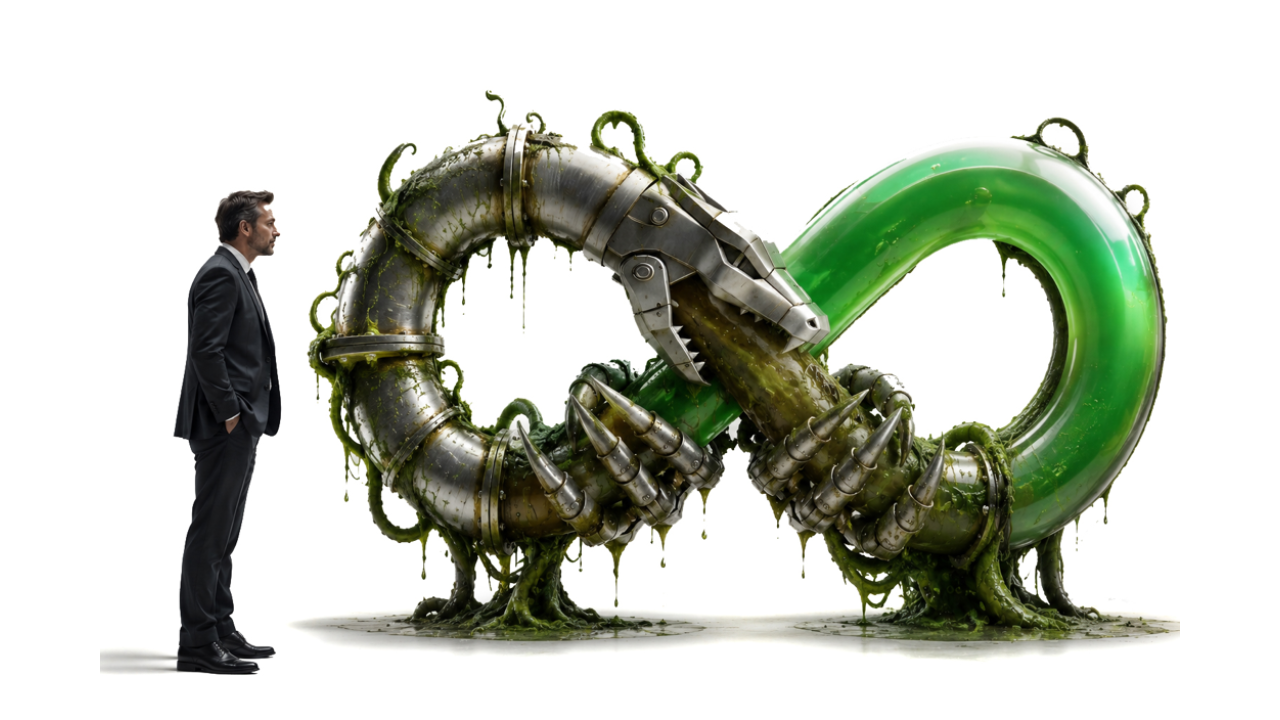
Modern water infrastructure has made cities and public health possible. But the systems built to collect, treat, and discharge water can overwhelm the rivers, reservoirs, wetlands, sediments, and food webs that supply water and renew its quality. Compliance at individual pipes cannot guarantee resilience across the water body that receives their combined load.

Explore →

OPERATIVE AXIOM 2

No treatment plan can outrun a deteriorating source-water trajectory.

The Planning Blind Spot

The Source-Water Risk We See but Have Not Yet Priced

Every treatment asset is designed around an assumption about future source water. Yet eutrophication, hypoxia, organic loading, and cyanobacterial risk are rarely treated as core capital-planning variables. The result is a widening gap between the water a plant was designed to treat and the water it will be asked to manage.

Explore →

OPERATIVE AXIOM 3

Water is secure only when it can be renewed for potable use.

Reusable Is Not Renewable

Why Water Reuse Is Not Water Security

Reuse can improve efficiency. It does not, by itself, guarantee that water remains safe, affordable, and reliable for the next potable-production cycle. Renewable Water is water repeatedly restored to potable-production condition without accumulating biological and chemical debt.

Explore →

OPERATIVE AXIOM 4

Symptom suppression is not restoration when it deepens biological debt.

The Paradox of Symptomatic Treatments

Cosmetic Improvement Makes Eutrophication Worse

Algaecides, herbicides, phosphorus inactivation, aeration, and dredging can alter a selected symptom. The test is whether they restore biological function or make the system harder to recover. A water body can look better while organic sediment, oxygen demand, nutrient recycling, and cyanobacterial risk continue to build beneath the surface.

Explore →

OPERATIVE AXIOM 5

A biological threat to water security needs a biological solution.

The Biotechnology Gap

Water Security Strategy Has A Biological Hole In It

Water management has extraordinary engineering capability, but eutrophication is a biological system failure. Applied biology provides the missing operating discipline: diagnosing root causes, restoring oxygen, sediment, nutrient, and food-web function, and verifying that recovery is real rather than cosmetic.

Explore →

The Conclusion

The New Agenda

From Symptom Management to Renewable Water

The five axioms rule out the old operating model: managing water in the pipes alone, treating source-water decline as an externality, mistaking reuse for security, confusing symptom suppression with restoration, and observing biological failure without the means to reverse it. The New Agenda sets the integrated response: manage built and natural infrastructure together, restore biological function, measure biological recovery, and make Renewable Water the practical standard.

Explore →

⎯ The Core Argument

The journey from reactive water management to Renewable Water.

Across six connected chapters, this series examines why conventional water management remains trapped in a cycle of recurring intervention, rising costs and declining ecological function.

Join us. The future of water is biological.

Site

SIS.BIO USA

SIS.BIO Australia

© Sustainable Infrastructure Solutions